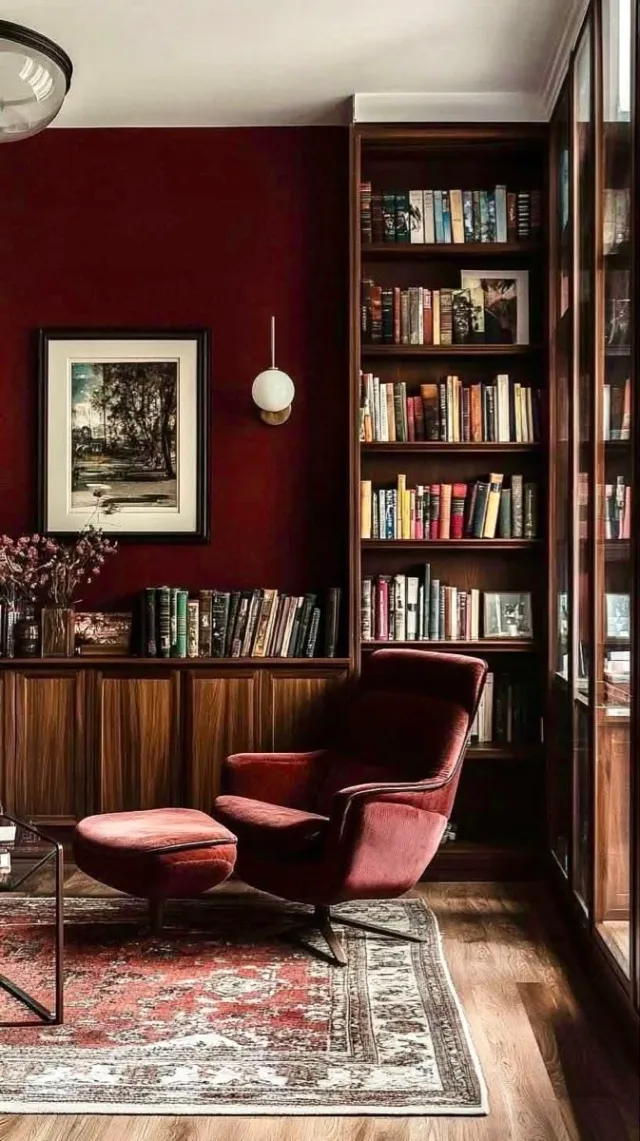
Choosing the right paint finish is just as crucial as selecting the pigment itself, as the sheen level dictates light reflection, durability, and how colours render across different lighting conditions. Paint finishes exist on a spectrum from 0% sheen (flat) to over 85% sheen (high-gloss), where lower sheens absorb light and conceal wall flaws, while higher sheens reflect light and offer superior scrubbability. Matching your pigment with the correct sheen ensures your walls not only look beautiful but withstand daily wear. If you have a reference image you are designing around, you can upload your inspiration photo to our free colour matching tool to identify the exact paint shades across top brands before specifying your finishes.
The Paint Finish Spectrum: Summary Table
Paint sheens are categorised by their percentage of light reflectance when measured at a 60-degree or 85-degree angle. Below is an overview of how the six primary paint finishes compare in reflectivity, scrubbability, and ideal placement across residential interiors.
| Finish | Sheen Percentage | Durability & Cleanability | Concealing Power | Ideal Applications |
|---|---|---|---|---|
| Flat | 0–2% | Low (Non-washable) | Exceptional | Ceilings, low-traffic display areas |
| Matte | 3–10% | Low to Medium | High | Bedrooms, living rooms, dining rooms |
| Eggshell | 10–25% | Medium to High | Moderate | Family rooms, hallways, general walls |
| Satin | 25–35% | High | Low to Moderate | Kitchens, bathrooms, high-traffic corridors |
| Semi-Gloss | 35–60% | Very High | Low | Skirting boards, trim, doors, cabinets |
| High-Gloss | 70–95%+ | Maximum | Very Low (Reveals all flaws) | Front doors, architectural joinery, statement ceilings |
Flat Paint (0–2% Sheen): Maximum Coverage, Zero Reflection
Flat paint absorbs almost all incoming light, creating a completely non-reflective surface that disguises deep drywall patches, tape lines, and surface bumps. Because flat paint contains a higher ratio of pigment to binder resin, it provides exceptional coverage but lacks a protective acrylic film, making it susceptible to burnishing when wiped.
In my practice, I specify flat paint almost exclusively for ceilings and decorative elements that receive zero physical contact. Ceiling planes are notorious for showing seams and uneven drywall work; a flat finish—such as Benjamin Moore Waterborne Ceiling Paint (508) or Sherwin-Williams Promar 400 Flat—ensures the ceiling recedes visually without distracting glares from downlights.
- Sheen Level: 0–2%
- Best For: Untextured ceilings, high accent display niches, historic plaster surfaces.
- Designer Tip: Never use standard flat paint in narrow hallways or children's bedrooms. Fingerprints produce dark, oily marks, and wiping the surface with a damp cloth will strip pigment and leave shiny burnished spots.
Matte Paint (3–10% Sheen): Deep Pigment for Low-Traffic Elegance
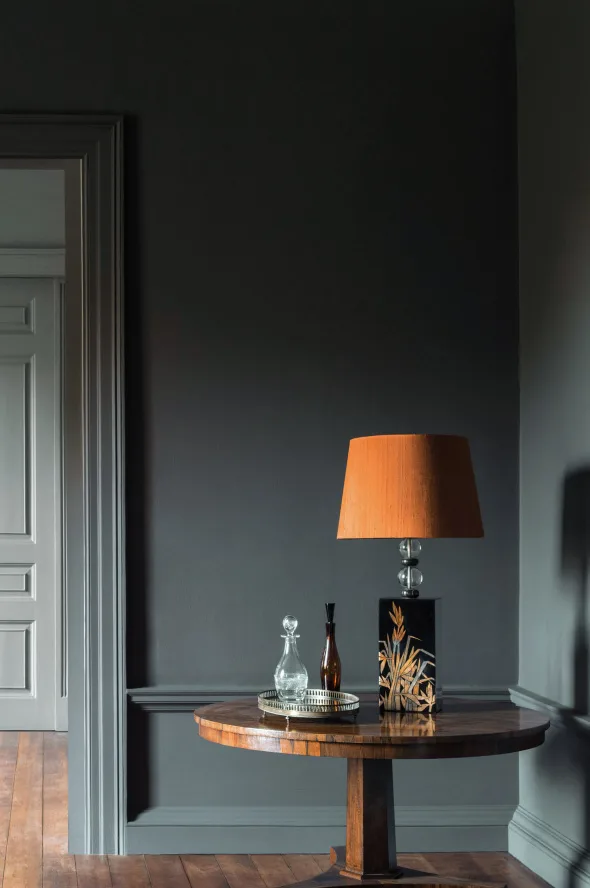
Matte paint offers a velvet-like texture that absorbs light while containing just enough resin binder to allow gentle wiping without immediate surface damage. This low-sheen profile highlights the deep, velvety saturation of saturated paint colours, making it a favourite for formal living areas.
I regularly recommend matte finishes like Farrow & Ball Estate Emulsion (2% sheen) or Benjamin Moore Regal Select Matte (N548) for primary bedrooms and formal dining rooms. The low light reflection allows dark hues—such as deep navy or forest green—to maintain their richness without developing harsh light reflections under chandelier or lamp light.
- Sheen Level: 3–10%
- Best For: Master bedrooms, formal dining spaces, low-traffic sitting rooms.
- Trade-off: Modern washable mattes (such as Dulux Trade Diamond Matte or Sherwin-Williams Duration Matte) use ceramic bead technology to boost scrubbability, though they still lack the smooth washability of eggshell or satin.
Eggshell Paint (10–25% Sheen): The Soft-Glow Workhorse for Living Spaces
Eggshell paint delivers a soft, low-lustre sheen resembling the delicate texture of an eggshell, balancing surface forgiveness with wipeable durability. It contains a higher binder resin density than matte paint, creating a protective coating that resists dirt, scuffs, and light scrubbing.
If a client asks for a single finish to use across all main living walls, eggshell is my standard specification. Premium formulations like Sherwin-Williams Duration Home Eggshell or Benjamin Moore Regal Select Eggshell (N510) provide enough washability to handle footprints, pet scuffs, and everyday hallway bumps while retaining a soft visual appearance.
- Sheen Level: 10–25%
- Best For: Hallways, living rooms, open-plan spaces, guest bedrooms.
- Application Note: Eggshell hides moderate wall imperfections well, but if your walls have rough patches or heavy joint compound repair work, ensure you apply a dedicated drywall primer first to prevent patchy sheen variation.
Satin Paint (25–35% Sheen): Durable Moisture-Resistance for Active Rooms
Satin paint features a pearl-like sheen that reflects noticeable light, providing strong moisture resistance and superior scrubbability. The higher concentration of acrylic binders forms a dense layer that repels moisture drops, grease splatters, and heavy friction.
I reserve satin finishes for active zones in the home, such as kitchens, bathrooms, utility rooms, and children's playrooms. Products like Sherwin-Williams Emerald Satin or Dulux Trade Diamond Satinwood withstand frequent cleaning with mild soaps. If you are uncertain whether your space needs an eggshell or satin finish, booking a session with a professional colour designer can help tailor specifications to your home's light and lifestyle demands.
- Sheen Level: 25–35%
- Best For: Kitchen walls, family bathrooms, playrooms, laundry spaces, window sills.
- Lighting Warning: In rooms with strong south-facing natural light, satin finishes can catch bright sun glare, which brightens the space but will highlight physical denting or uneven wall texture.
Semi-Gloss Paint (35–60% Sheen): Architectural Highlight for Trim and Joinery
Semi-gloss paint creates a sleek, noticeably shiny surface that is exceptionally easy to clean, highly water-resistant, and built to withstand impact. The high resin volume creates a smooth surface that repels water vapour, food splatters, and hand oils.
Semi-gloss is the industry standard for interior trim packages, including skirting boards, architraves, door frames, and interior doors. I frequently specify waterborne alkyd semi-gloss paints—such as Benjamin Moore Advance Semi-Gloss (793)—for trim work because they cure to a furniture-grade finish without yellowing over time like oil-based paints.
- Sheen Level: 35–60%
- Best For: Skirting boards, architraves, doors, kitchen cabinetry, bathroom vanity units.
- Prep Requirement: Because semi-gloss reflects sharp light, every brush stroke, sanding scratch, or wood grain flaw will be visible. Thorough sanding down to 220-grit and using a high-build primer are essential.
High-Gloss Paint (70–95%+ Sheen): Lacquer-Level Drama and Maximum Protection
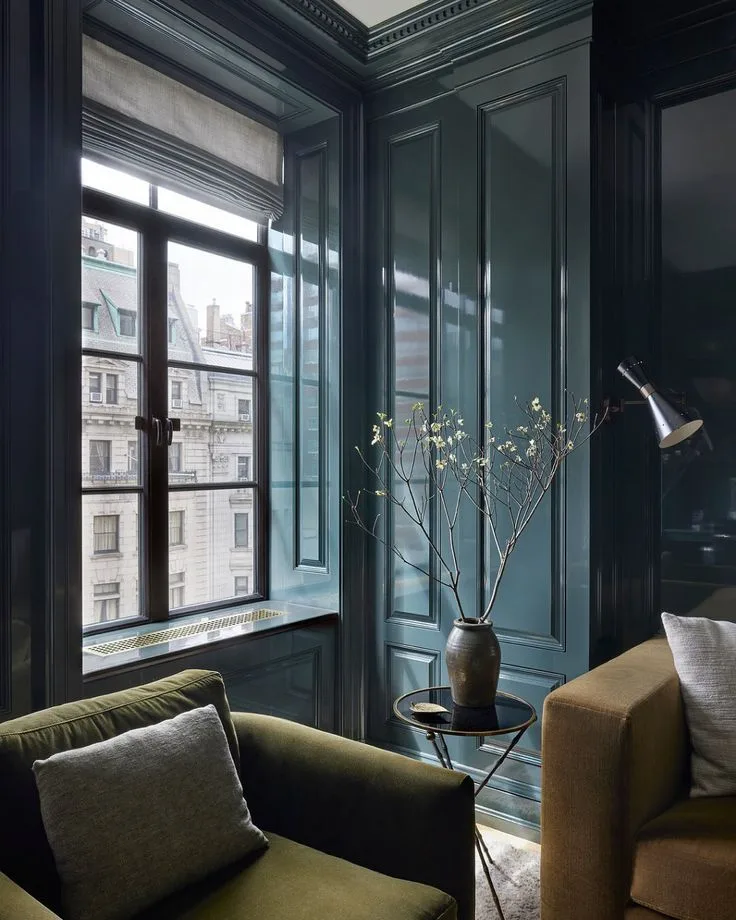
High-gloss paint cures to a mirror-like finish, offering maximum durability and dramatic light reflection. It creates an ultra-hard surface that is completely waterproof and scrubbable, but its high reflectivity shows every flaw underneath.
High-gloss is a specialty finish used by interior designers to add contrast and drama. I use paints like Farrow & Ball Full Gloss (95% sheen) or Fine Paints of Europe Hollandlac Brilliant on front doors, historic library woodwork, or lacquered dining room ceilings. A high-gloss ceiling in a dark room reflects light back into the space, creating an illusion of added height and depth.
- Sheen Level: 70–95%+
- Best For: Exterior front doors, architectural millwork, statement ceilings, built-in bars.
- Expert Caution: High-gloss requires flawless surface preparation. Painters must skim-coat, sand, and auto-body polish the surface prior to application; otherwise, surface unevenness will look distorted under direct lighting.
How Natural Light and Surface Prep Dictate Your Finish Choice
Natural lighting changes how paint sheen behaves in a room. South-facing light intensifies gloss, making an eggshell look like a satin, while weak north-facing light flattens sheens, making matte finishes look completely flat.
Before finalizing your paint order, observe your paint samples at different times of day:
- Assess Wall Quality: If your plasterwork is older or uneven, stick to flat, matte, or eggshell sheens to conceal imperfections.
- Evaluate Cleaning Needs: For high-traffic areas with pets or children, prioritize washable mattes, eggshells, or satins.
- Coordinate Sheen Transitions: A classic, timeless sheen combination is Matte or Eggshell on walls, Flat on ceilings, and Semi-Gloss on trim and doors.
If you want to hire professional decorators to handle complex high-gloss or multi-sheen applications, you can explore our curated directory of vetted painters and colour designers to bring your project to life.